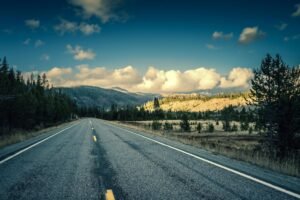
How to Tow Your RV Safely Through Horseshoe Bend, Idaho (Without Using the Runaway Truck Ramps)
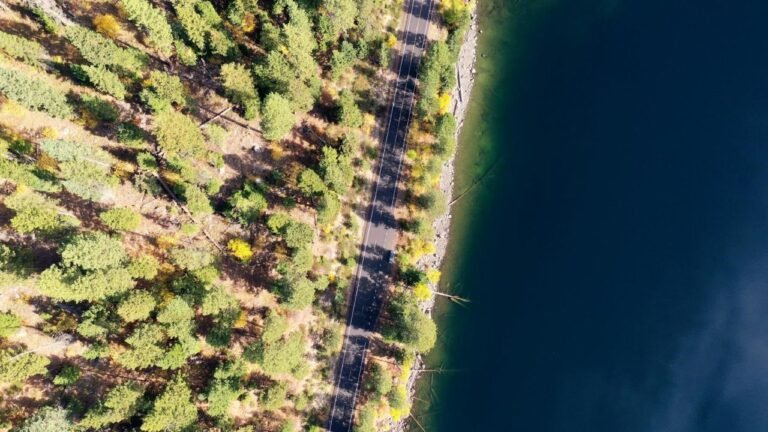
The Hill That Separates Real RVers from Weekend Warriors
Here’s something nobody tells you when you’re shopping for an RV at a Boise dealer: State Highway 55 through Horseshoe Bend is going to test every single thing about your towing setup.
It’s a 1,600-foot descent with grades hitting 5% to 7%. It has multiple runaway truck ramps for a reason. And it handles 6,500 vehicles a day, many of them towing trailers up to McCall, Cascade, or Tamarack Resort.
If your truck isn’t capable of handling your trailer weight, you’ll find out real fast coming down Horseshoe Bend Hill.
If your trailer brakes aren’t set up correctly, you’ll smell them halfway down.
And if you’re the type who thinks “I’ll just ride my brakes the whole way,” you’re going to have a very bad day.
I’ve towed through Horseshoe Bend dozens of times. I’ve seen people pulled over with smoking brakes. I’ve seen trailers swaying across lanes because the driver was going too fast into a corner. I’ve even seen someone use a runaway truck ramp (thankfully, they stopped safely).
So let’s talk about how to tow through Horseshoe Bend without becoming a cautionary tale.
Why Horseshoe Bend Is the Gateway (and the Test)
Horseshoe Bend sits at the intersection of the Treasure Valley and central Idaho’s mountains. It’s the town you drive through to get to the good stuff: McCall, Ponderosa State Park, Banks (for whitewater rafting), and Cascade.
But before you get there, you have to survive the hill.
Here’s what makes Highway 55 through Horseshoe Bend challenging:
- The descent is steep. You’re dropping 1,600 feet in elevation over a relatively short distance. That’s a 5% to 7% grade, which doesn’t sound like much until you’re towing 8,000 pounds and your brakes are screaming at you.
- The curves are tight. Old Freeze Out Road near the top has 26 curves. The main highway isn’t much better. If you come into a corner too fast, your trailer is going to push you.
- The traffic is relentless. 6,500 vehicles a day means you’re sharing the road with impatient drivers, other RVs, semi-trucks, and people who think they can pass on a blind curve.
- There’s no room for error. The shoulders are narrow. The drop-offs are steep. And if your brakes fail, your only option is a runaway truck ramp.
If you’re towing a 30-foot travel trailer with a half-ton truck and inadequate brakes, Horseshoe Bend will expose every weakness in your setup.
So let’s make sure you’re ready.
Rule #1: Make Sure Your Truck Can Actually Tow Your Trailer
This is the most important thing, and it’s the thing most people ignore.
Your truck might have a “tow rating” of 10,000 pounds. That’s great. But tow ratings are calculated on flat ground with ideal conditions. They don’t account for steep mountain grades, tight corners, or sustained braking on a descent.
Here’s what actually matters when towing through Horseshoe Bend:
Gear Ratios
Your truck’s rear-end gear ratio determines how much torque you have for climbing hills and how much engine braking you have for descending.
A 3.73 or 4.10 rear-end ratio gives you better low-end torque and more control going downhill. A 3.55 or 3.42 ratio (common on trucks built for fuel economy) will struggle.
If you’re shopping for a tow vehicle and you know you’ll be driving Highway 55 regularly, get the 3.73 or 4.10 gear ratio. It makes a massive difference.
Transmission
Your transmission needs to be able to hold lower gears without overheating. A 6-speed or 8-speed automatic with a “tow/haul mode” is ideal. Older 4-speed automatics will overheat on long descents.
Braking Power
Your truck needs to be able to stop your trailer, not just slow it down. If you’re towing near your truck’s max capacity, your brakes are going to work overtime on the descent into Horseshoe Bend.
Consider upgrading to:
- Trailer brake controllers with adjustable gain (so you can fine-tune how hard your trailer brakes grab)
- Upgraded brake pads on your truck (high-performance pads handle heat better)
- Exhaust brakes or engine brakes (if you have a diesel truck, this is a game-changer)
If you’re buying a new RV and need help matching it to the right tow vehicle, talk to dealers who understand towing in the mountains. Places like Dennis Dillon RV, Bretz RV & Marine, and Uncharted Recreation can help you match your truck to a trailer that won’t kill you on Highway 55.
Search RV Dealer Inventory Below
Search results may vary due to how dealer websites display inventory. For questions, contact hello@rvdealersboise.com
Rule #2: Slow Down (Seriously, Just Slow Down)
The speed limit on Highway 55 through Horseshoe Bend is 55 mph in most sections. But if you’re towing a trailer, you should not be going 55 mph.
Here’s why:
The corners come fast. When you’re descending, gravity is pushing your trailer. If you come into a corner at 55 mph, your trailer is going to want to keep going straight. That’s called “trailer sway,” and it’s how people end up in ditches.
Your stopping distance is longer. A truck towing a 7,000-pound trailer needs significantly more distance to stop than a passenger car. If someone slams on their brakes in front of you, you need extra time and space to react.
Your brakes get hot. The faster you’re going, the more you have to use your brakes. The more you use your brakes, the hotter they get. Hot brakes fade. Faded brakes don’t work.
My rule of thumb: If the descent feels steep, drop your speed by 10 mph below the speed limit. If you’re uncomfortable, drop it another 5 mph. Let the impatient drivers pass you at a safe pull-out. Your safety is more important than their schedule.
Rule #3: Use Your Transmission (Not Just Your Brakes)
This is the mistake I see all the time: People ride their brakes the entire way down Horseshoe Bend Hill.
Don’t do that.
Your brakes are designed for short bursts of stopping power, not sustained use over miles of descent. If you ride your brakes for 10 minutes straight, they will overheat. Once they overheat, they fade. Once they fade, you’re in serious trouble.
Here’s what you should do instead:
Turn On Tow/Haul Mode
Almost every modern truck has a “tow/haul” button. Turn it on before you start your descent.
Tow/haul mode changes how your transmission shifts. Instead of upshifting to save fuel, it holds lower gears to use engine braking. This keeps your RPMs higher, which slows you down without using your brakes.
On some trucks, tow/haul mode also adjusts the throttle response and increases transmission fluid pressure to prevent overheating.
Manually Downshift Before the Descent
Don’t wait until you’re halfway down the hill to downshift. By then, you’re already picking up speed and your brakes are already hot.
Instead, downshift BEFORE you start the descent. Drop your transmission into a lower gear (usually “4” or “3” on an automatic) and let the engine hold you back.
On a 5% to 7% grade, you should be in 3rd or 4th gear, not 6th. Your RPMs should be around 2,500 to 3,500, which gives you maximum engine braking without over-revving.
Use Exhaust Brakes (If You Have Them)
If you’re towing with a diesel truck, you probably have an exhaust brake (sometimes called a “jake brake” or “engine brake”).
Turn it on.
Exhaust brakes redirect exhaust gases back through the turbo, which increases compression and creates massive engine braking. On a steep descent, a good exhaust brake can hold you at a steady 30 mph without touching the brake pedal.
If you don’t have an exhaust brake, consider installing one. It’s a game-changer for mountain towing.
Rule #4: Set Up Your Trailer Brakes Correctly
Your trailer brakes should activate at the same rate as your truck’s brakes. If your trailer brakes grab too hard, your trailer will lock up and start swaying. If they don’t grab hard enough, your truck is doing all the work and your brakes will overheat.
Here’s how to test your trailer brake controller:
- Find a flat, empty parking lot.
- Accelerate to about 25 mph.
- Use your trailer brake controller’s manual override button to activate ONLY the trailer brakes.
- The trailer should slow you down smoothly without locking up the wheels.
If the trailer locks up, reduce the gain on your brake controller. If it barely slows you down, increase the gain.
Once you’ve dialed in the right setting, test it again at highway speeds. The trailer should brake firmly without skidding or swaying.
Important: Don’t set your trailer brakes too aggressively. On a steep descent like Horseshoe Bend, if your trailer brakes lock up, you’ll lose control fast.
Rule #5: Watch Your Gauges (Especially Transmission Temperature)
Your truck has gauges for a reason. Use them.
On a long climb or descent, keep an eye on:
Transmission temperature: If it starts climbing above 200°F, you’re working the transmission too hard. Downshift to a lower gear or pull over and let it cool down.
Coolant temperature: If your engine starts overheating (above 220°F), pull over immediately. Let it cool down before continuing.
RPMs: On a descent, your RPMs should be around 2,500 to 3,500. If they’re lower, downshift. If they’re redlining (over 4,000), upshift.
Brake temperature (if your truck has it): Some newer trucks have brake temperature sensors. If yours shows your brakes getting hot, ease off and use engine braking instead.
If you don’t have a transmission temperature gauge, consider installing an aftermarket one. It’s cheap ($50 to $100) and could save you from a $5,000 transmission rebuild.
Rule #6: Don’t Stop on a Steep Incline
If you’re climbing the hill and you start building up a line of cars behind you, don’t stop on the steep part to let them pass.
Why? Because getting a heavy trailer moving again on a steep incline is nearly impossible. Your truck will struggle, your transmission will overheat, and you’ll create an even bigger traffic problem.
Instead, wait for a flat section or a designated pull-out. There are several safe pull-outs on Highway 55 where you can let traffic pass without stopping on a grade.
Rule #7: Plan Your Travel Times (Avoid Peak Traffic)
Highway 55 through Horseshoe Bend sees 6,500 vehicles a day, and traffic is heaviest on weekends and holidays.
Here’s when to drive (and when to avoid it):
Best Times to Tow Through Horseshoe Bend
Weekday mornings (Tuesday through Thursday, 6:00 AM to 9:00 AM): Traffic is lightest, drivers are more alert, and you’ll have plenty of space to tow safely.
Mid-day (10:00 AM to 3:00 PM): Traffic is moderate, visibility is good, and you avoid rush hour congestion.
Worst Times to Tow Through Horseshoe Bend
Friday afternoons and evenings (4:00 PM to 7:00 PM): Everyone is heading north to McCall for the weekend. Traffic is bumper-to-bumper, drivers are impatient, and accidents are common.
Sunday afternoons and evenings (3:00 PM to 7:00 PM): Everyone is heading south back to Boise. Same problems as Friday, just in the opposite direction.
Major summer holidays (Memorial Day, Fourth of July, Labor Day): These are the most dangerous days to drive Highway 55. Fatal accidents spike during these weekends.
Night (after 8:00 PM): Reduced visibility, fatigued drivers, and increased risk of encountering impaired drivers make night driving significantly more dangerous.
During active weather (snow, ice, heavy rain): If there’s a snowstorm, don’t tow. Period. Check Idaho 511 before you leave.
Rule #8: Know Where You Can Camp (If You Need a Break)
If you’re towing through Horseshoe Bend and you need to stop for the night, there are several campgrounds in the area.
Close to Horseshoe Bend
Riverlife RVing (Sweet, ID): About 5 miles west of Horseshoe Bend, this small park has 7 sites directly on the Payette River with electric hookups. Great spot to rest before tackling the hill.
Ole RV Park (Horseshoe Bend): Located right in town, this park offers unique vintage trailer rentals and RV sites. Convenient if you want to stop before the climb.
Montour WMA Campground (Sweet, ID): An affordable option ($8/night) with river access. Peaceful and close to Highway 55.
North of Horseshoe Bend (Toward McCall)
Swinging Bridge Campground (Banks): About 18 miles north, this Forest Service site is rustic but close to the river and popular with rafters.
Pine Flats Campground (Garden Valley): About 21 miles from Horseshoe Bend, famous for its easy hike to natural riverside hot springs.
High-Elevation Options
Shafer Butte Campground: About 11 miles away at higher elevation, providing cooler temperatures and mountain biking trails.
If you’re planning a trip to McCall or Cascade and want to test your rig before the big climb, consider stopping at one of these campgrounds first. Better to discover a problem at a campground than halfway up a 7% grade.
Which RVs Are Best for Towing Through Horseshoe Bend?
Not all RVs are created equal when it comes to mountain towing. If you’re shopping for an RV and you know you’ll be driving Highway 55 regularly, here’s what to look for:
Lightweight Travel Trailers (Under 5,000 lbs)
If you have a half-ton truck (Ford F-150, Chevy Silverado 1500, Ram 1500), stick with lightweight trailers. These are easier to control on descents and won’t overwork your brakes.
Good options:
- Forest River R-Pod (2,500 to 3,500 lbs) – Perfect for first-time towers, available at Uncharted Recreation
- Jayco Jay Feather Micro (3,000 to 4,500 lbs) – Available at Bish’s RV of Meridian
- Winnebago Micro Minnie (3,500 to 5,000 lbs) – Dennis Dillon RV carries these
Mid-Weight Travel Trailers (5,000 to 7,500 lbs)
If you have a three-quarter-ton truck (F-250, Silverado 2500, Ram 2500), you can handle mid-weight trailers. These offer more space without being unmanageable on steep grades.
Good options:
- Keystone Bullet (5,000 to 7,000 lbs) – Available at Legacy Powersports
- Grand Design Reflection (6,500 to 8,500 lbs) – Bretz RV & Marine stocks these
- Northwood Arctic Fox (5,500 to 8,000 lbs) – Built for four-season camping, available at Legacy Powersports
Heavy Travel Trailers and Fifth Wheels (Over 8,000 lbs)
If you’re towing anything over 8,000 lbs, you NEED a three-quarter-ton or one-ton truck with the right gear ratio and brakes. Don’t even attempt Horseshoe Bend with a half-ton.
Good options:
- Lance truck campers (2,500 to 4,500 lbs in the truck bed, not a trailer) – Dennis Dillon RV carries Lance
- Thor Motor Coach (motorhomes, so no towing required) – Available at Bretz RV & Marine
- Coachmen fifth wheels (8,000+ lbs) – Dennis Dillon RV has a large selection
If you’re not sure what your truck can safely tow through the mountains, talk to a dealer BEFORE you buy. Happy Camper RV has three locations in the Treasure Valley and can help match your truck to the right trailer.
What to Do If Your Brakes Start to Fail
Let’s talk about the worst-case scenario: You’re descending Horseshoe Bend Hill, your brakes are fading, and you’re picking up speed.
Here’s what to do:
Step 1: Don’t Panic
Easier said than done, but panicking makes everything worse. Take a deep breath and focus on the road.
Step 2: Downshift Immediately
Drop your transmission into the lowest gear that won’t over-rev the engine (usually 2nd or 3rd gear). This will use engine braking to slow you down.
If you have an exhaust brake, turn it on NOW.
Step 3: Use Your Trailer Brake Controller
Use the manual override on your trailer brake controller to activate ONLY the trailer brakes. This takes some of the load off your truck’s brakes and gives them time to cool.
Step 4: Look for a Runaway Truck Ramp
Highway 55 has multiple runaway truck ramps on the descent into Horseshoe Bend. If your brakes are gone and you can’t slow down, use one.
Runaway truck ramps are steep gravel tracks designed to stop heavy vehicles. They’ll wreck your suspension and probably total your trailer, but that’s better than going off a cliff.
Step 5: Don’t Swerve
If your brakes are fading and you’re picking up speed, DO NOT swerve to avoid traffic. Stay in your lane, use your horn, and focus on slowing down. Swerving will cause your trailer to jackknife or roll.
The good news: If you follow the rules in this guide (slow down, use engine braking, watch your gauges), you’ll never need a runaway truck ramp.
Final Thoughts: Horseshoe Bend Isn’t Scary If You’re Prepared
Here’s the truth: Thousands of RVers tow through Horseshoe Bend every week without any problems.
The ones who have problems are the ones who:
- Tow trailers that are too heavy for their trucks
- Don’t use engine braking
- Ride their brakes the entire descent
- Drive too fast into corners
- Don’t check their gauges
If you avoid these mistakes, Horseshoe Bend is just another hill.
Before your next trip to McCall, Cascade, or Banks:
- Make sure your truck can handle your trailer weight
- Check your trailer brakes
- Turn on tow/haul mode
- Slow down
- Use your transmission, not just your brakes
- Watch your gauges
- Plan your travel time to avoid peak traffic
And if you’re shopping for a new RV, talk to a local dealer who understands mountain towing. Dennis Dillon RV, Bretz RV & Marine, Bish’s RV of Meridian, Uncharted Recreation, and Happy Camper RV can all help you find a rig that won’t give you a heart attack on Highway 55.
Now get out there and enjoy central Idaho. Just take it slow coming down the hill.
The Ultimate Meridian RV Showdown: Your Complete Guide to Shopping at Bish’s RV vs. Camping World
Boise RV Dealer Guide: An Honest Look at Every Dealership in the Treasure Valley
How to Dewinterize Your RV in Idaho: The Complete Guide (Plus Where to Camp First)